by Cheryl Plummer, Dean of Students
Navigating Mean Girl Behavior
Recently my social media feed has been full of articles written by mothers sharing their successes and frustrations as they try to support their daughters in navigating the painful reality of “mean girl” behavior. These stories resonate with me because they capture many of the things we see too often in schools: the exclusion, the shifting alliances, the group texts, and the side conversations that leave one child feeling isolated and struggling with the quiet, complicated hurt that follows. For the record, this isn’t something that affects only the girls, many boys share these experiences too.
At Kent School, Tiffany Newport, School Counselor, and I consistently partner together in caring for our students’ social and emotional wellbeing. We not only take these situations seriously, we approach them carefully. We need to teach our children that belonging is not just about being included, it’s about being respected.
When is it Bullying?
One of the most important distinctions we help students (and adults) understand is the difference between rude behavior, mean behavior, bullying, and typical social conflict. The vocabulary we use is intentional and important. When everything is labeled as “bullying,” we lose the nuance required to respond effectively. True bullying involves intentional, repeated, targeted harm with a power imbalance. Social conflict, while painful, often involves multiple perspectives, misunderstandings, and shared responsibility. These distinctions, while helpful, do not minimize a child’s pain. If a student feels excluded, dismissed, or scapegoated, the emotional impact is real. Stomach pain is real. Anxiety is real. Friendship stress can feel overwhelming, especially in middle school, where identity and belonging are everything.
Understand vs. Fix
Our role, however, is not to “fix” situations for students. Instead, we begin by listening carefully to the student’s experiences and working to understand the full picture. We gather information from multiple perspectives, we hold students accountable for their part in the dynamic, and we use those moments as opportunities to teach the skills needed to build stronger, healthier relationships. Throughout the process, we partner closely with families to ensure that home and school are working together to support each child’s social and emotional growth.
Often, students are able to acknowledge their contributions to growing social tension. Taking accountability is an important step in repairing harm and restoring balance. Offering a restorative conversation so apologies can be shared directly, acknowledging both the intent and the impact of actions, and respecting a student’s request for time and/or space when needed are all fundamental to the success of our approach. Restoration only works when the timing feels safe.
Be An Upstander, not a Bystander
We consistently revisit social-emotional lessons. We talk about intent vs impact. We talk about inclusion. We talk about being an upstander instead of a bystander. We talk about courage, both the courage to speak up and the courage to examine our own behavior. We talk, we role play, and we talk some more. These are not “one-and-done” lessons, but an ongoing discussion that spirals through our SEL curriculum. A student may say, “I didn’t mean it that way,” or, “I was just kidding,” but if the impact caused harm, we need to address it.
Choosing Citizenship and Kindness
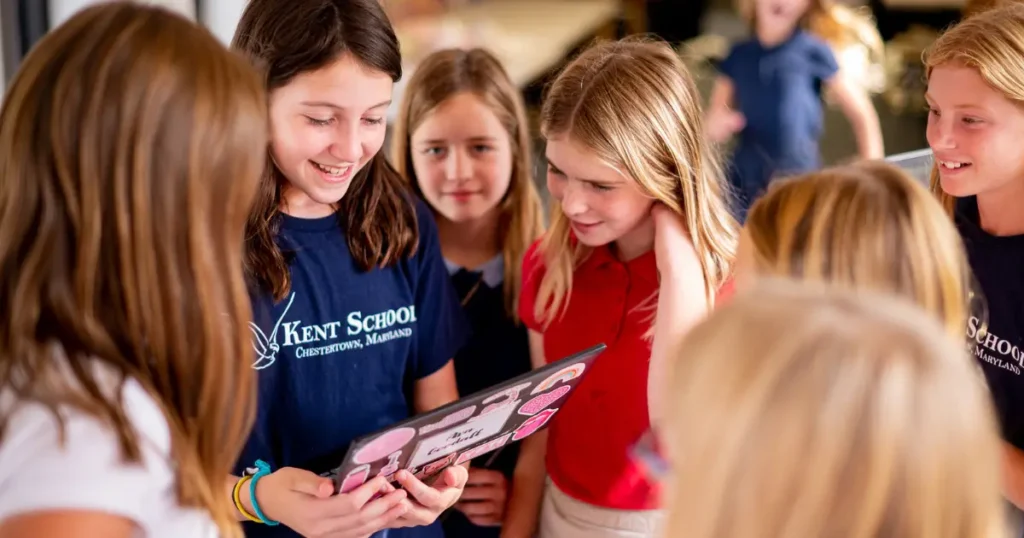
What encourages me most is that when students are supported thoughtfully, they often rise to the occasion. We see small but meaningful gestures that help to shift the dynamics. By choosing to sit next to someone who may be feeling isolated, making an effort to reconnect, softening language, and adjusting behavior, students are showing us they care. These moments may not seem like a big deal, but they are where character is formed.
Friendship conflict is not a sign that something is broken. It is a sign that children are learning how to be a contributing member of a community. That learning can be uncomfortable. But when home and school work together by communicating early and honestly and avoiding assumptions and blame, the conflict becomes an opportunity rather than a crisis.
At Kent School, we are committed to ensuring every child feels safe, heard, and valued. That commitment does not mean eliminating every hard moment. It means walking beside our students as they walk through those hard moments with steadiness, clarity, and care.