Written by Jenny Cernak, Assistant Head of School for Academics
Recently, there has been significant national dialogue regarding digital literacy platforms in schools, specifically iReady Literacy, and its impact on the student experience. Concerns that these platforms can rob students of the opportunity to engage with full texts, participate in deep classroom conversations, and explore diverse perspectives are all valid. At Kent School, we value our partnership with you in preserving childhood and protecting the learning environment. Our pedagogical approach and our long-standing commitment to deep learning translate to a low-screen, high-engagement environment in the classroom.
Student Engagement Beyond Screens
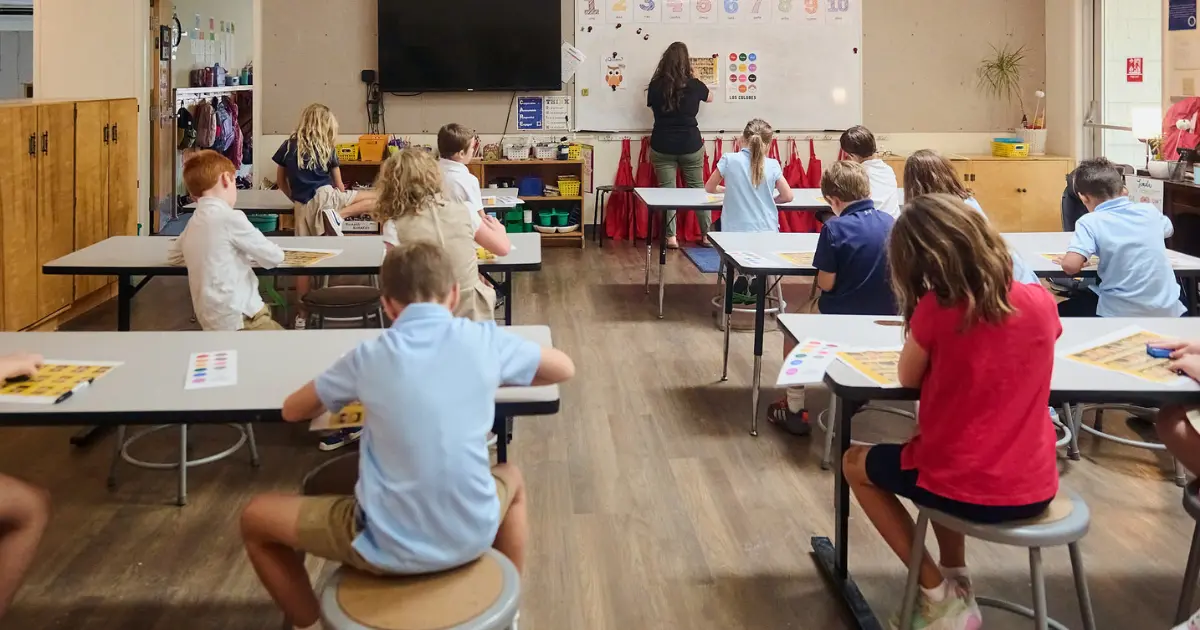
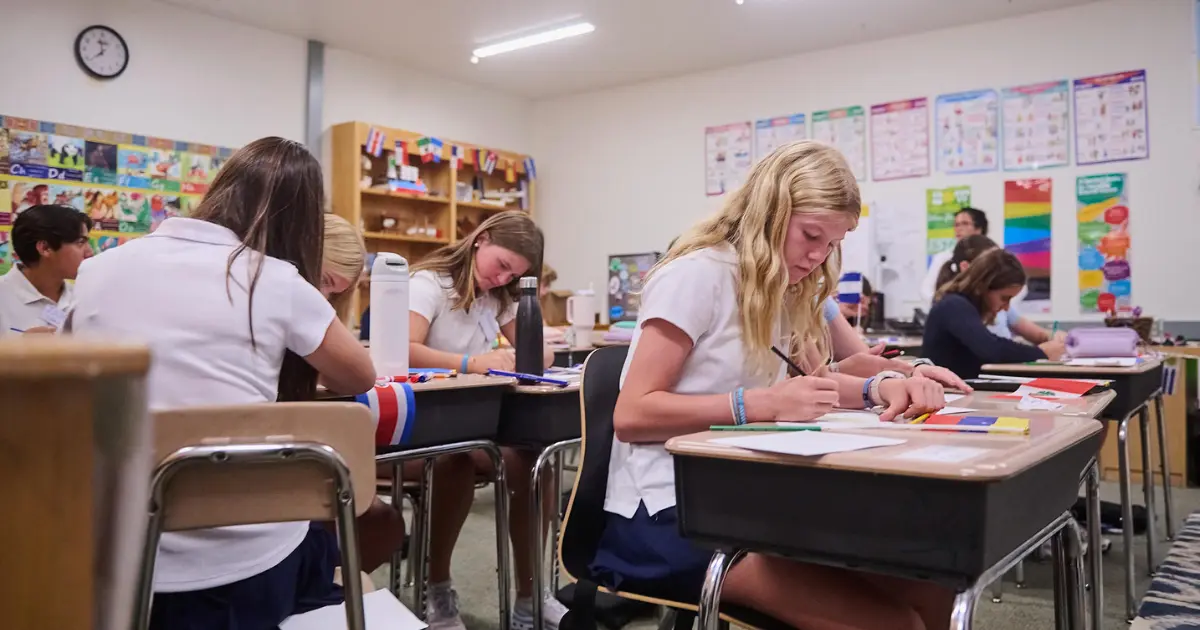
Kent School does not use, and has no plans to use, iReady Literacy. We have always been mindful that becoming a lifelong reader requires more than navigating a digital interface. Students engage with complete books, allowing them to dive into complex themes and character development over time. We prioritize a curriculum that reflects a wide range of cultures, histories, and perspectives. Moreover, face-to-face conversations are an integral part of the classroom experience for our students.
Teacher Led Instruction, Not Platform-Led Learning
We do utilize iReady Math. However, before adopting it we took measures to ensure its use played a specific and limited role in student learning. It is used as a tool and resource, not as a replacement for teaching. Think of iReady Math as a "GPS" for personalized learning. It helps our faculty identify specific gaps in a student’s mathematical foundation so teachers can provide targeted, human-led instruction. It is a supplement that allows for differentiation, but it does not replace the problem-solving and collaborative inquiry led by our teachers.
Balancing Screen Time and Real-World Learning
As I recently shared with our faculty, the academic day should be a sanctuary for active engagement and learning. In an era of immediate digital gratification, the more time students spend on screens, the less they are "practicing at life." Navigating the physical world, solving interpersonal problems, and learning to sit with reduced stimuli are among the most important cognitive skills a child can develop.
Building cognitive stamina requires intentionality. Recent research from 2025 and early 2026 continues to highlight that passive screen time has a significantly more detrimental effect on the developing brain than interactive or educational use. Use should be directly tied to a specific learning objective and require active participation, such as coding or creating. When students need a "brain break," we prioritize physical movement, quiet reading, or drawing. When students have to navigate their environment and solve problems in real-time, the best learning happens.
At Kent School, we believe the best learning happens through meaningful conversation, thoughtful reading, and engaged teaching. Our classrooms are intentionally designed to foster curiosity, critical thinking, and real-world problem solving.
If you’re interested in learning more about Kent School’s approach to academics and student development, we invite you to explore our programs or connect with our admissions team.
FAQ: Digital Platforms and Screen Use at Kent School
No. Kent School does not use iReady Literacy and has no plans to adopt it. Our literacy program centers on full texts, teacher-led instruction, and deep classroom discussion.
We believe developing strong readers and critical thinkers requires sustained engagement with books, conversations, and real-world problem solving.
Students use iReady Math as a limited diagnostic tool that helps teachers identify learning gaps, but it does not replace teacher-led instruction.